

Origin and History of the Chihuahua
Overview
Did you ever wonder where the smallest dog breed in the world came from? Here will will discuss the interesting history of the Chihuahua breed.
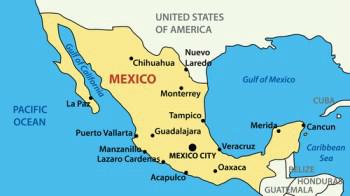
There are many theories regarding the development of this tiny breed of dog, though everyone agrees on specific elements. The Chihuahua is named for the Mexican state of “Chihuahua” that borders the states of Texas, Arizona, and New Mexico in the USA. While there are some differing ideas about the ancestors of this breed, the one fact that remains clear is the location of origin. And we owe that to the fact that the dog was named for the place of origin by exact spelling of the name, with no changes made over time as is what happens in many other cases with different dog breeds.
The Aztec Theory
The most popular and most credible theory is that the Chihuahua descended from the Techichi, a small canine that dates back to ancient Mayan times. There are very few dogs that are as small as the Chihuahua, so in terms of genetics, the breeding that has been taking place since origin and the size of the dog that we know of today, this all fits into place.
The Mayan Indians of South America created clay sculptures of tiny dogs that resemble a Chihuahua "type". These statues are dated back to the 5th century AD.
The Toltecs (the people that conquered the Mayans by 1100 AD) are believed to be the first to tame the Techichi. The Techichi was kept by the Toltecs as a pet and this breed was used as part of the funeral ceremonies.
When someone of importance was buried, pots with carvings of dogs were buried with them. There are clay pots - dating to 300 BC - that depict this tiny dog that is thought to be the Chihuahua's ancestor.
What is really interesting, is that drawings and carvings show both theapple head and the deer head
shape. This deepens the mystery a bit since only the applehead is the breed standard, the deerhead is not even an official variety of the breed and there are no clear records of how or when two different skull shapes came to be.
The Techichi was very similar in body structure to the Chihuahua. It was small, had a moderately short tail, erect ears and importantly it had a short, close and tight coat. Despite the resemblance to the Chihuahua, there are some who believe that further development needed to have been done to bring us to the dog we know of today.
The ongoing Aztec theory then continues to say that the Toltecs may have crossbred the Techichi with a dog breed that occupied the mountains of Chihuahua, called the Perro Chihuahueno. It is said that the Perro Chihuahueno was a foraging sort of dog, which lived in holes in the ground. They had round heads, long nails, and short, erect ears.
Drawing and carving of this dog - whether or not the Techichi was crossed with the Perro Chihuahueno - was discovered in the ancient writings in Mayan, Toltec, and Aztec tombs, temples, and pyramids. From remains discovered at pyramids and in graves, it is assumed that these people thought that the dog would play a role as guides for the human soul.
Archaeologists suggest that the affluent Aztec people and clergy thought the Techichi was to be revered while the lower class had little use for the dogs and it is theorized that they may have used them as a food source, but this is not exactly clear.
When the explorers arrived in the New World it is thought this dog was bred with a dog that was brought over (it is still up for question as to which breed that was) and the result is the dog that we have today.
Writings show that the Spanish conquerors that invaded Mexico, the Caribbean, and South America had with them a small, black and tan, terrier type dog. Due to this crossing of the black and tan terrier type dog with the Techichi, it is concluded that the Chihuahua resulted.
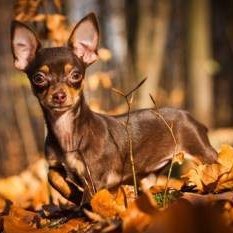
This may explain the many colors that can be found with this breed. Ancient drawings and carvings showed fawn colored dogs. The Chihuahua of today can be found in many combinations of colors including red, silver, black, chocolate and white. There are patterns of fur that included sable (black tipped hairs) and brindle (a striping pattern of fur). This leads one to believe that color
genes must have been introduced via a breed that held the genetics for those possible colors and patterns.
There is a myth that when Christopher Columbus saw a Chihuahua for the first time that he thought the dog was mute. This is not true. Stories often become exaggerated with time.
As you will find in our Facts
section, is that he did come across the dog, and since the one he encountered was extremely shy and quiet, he made a note of the dog's behavior in his journal...And that simply, over time, changed into the more dramatic "mute" version of the story.
This breed, while originating in Mexico soon became popular in the States due the sale of puppies to tourist close to the border. Records show that an American judge bought a Chihuahua from El Paso Texas and later, another from Tucson Arizona.
Current Chihuahua History
The first Chihuahua to be officially registered in the United States was a dog called Midget that entered the AKC stud book in 1904 along with 3 others. Thirty Chihuahuas were registered in the United States by 1913. 25,000 were registered by 1972. In 2012, there are over 40,000 registered with the American Kennel Club - over 1000 each year are added - and this of course does not include those that are listed with the CKC, other kennels and those that are not registered at all.
The breed's popularity soared to an all time high in 1997 when a Chihuahua named Gidget (a female dog) played the role of Taco Bell's mascot. She famously called out (via a human male's voice-over) "Yo quiero Taco Bell!” which means “I want Taco Bell!”.
This breed is also popular in the UK. The most recently released statistics show that the Chihuahua was the 3rd and 4th most registered toy dog, with the longcoat (3rd) being slightly more popular than the short coat (4th). It is also very popular throughout Canada, Europe, Australia and the Philippines.
The Chihuahua is credited - by some- with the development of the Russkiy Toy dog. This is mainly based on the dog having both a short and long coat. The Russkiy was bred in isolation in Russia, so very little is know about its history.
What Lies Ahead
All canine breeds change over time. And as they emerge, some are eventually accepted into the AKC.
For example, since 1990 until now, 6 "new" dog breeds have been accepted into the AKC as purebreds. These dogs did exist for some time before, however they were not recognized. With the majority of them, breeding was still being perfected.
The standard (weight, height, coat color, etc) was still being scrutinized and written meticulously. At a certain time, it would become overwhelmingly clear that the dog was not a different "type" of another.
Developmental breeding was on-going and being carefully checked to ensure the standard was being followed. In the end, the dog deserved to be recognized.
The 6 new breeds since 1990 are:
- American English Coonhound
- Cesky Terrier
- Entlebucer Mountain Dog
- Finnish Lapphund
- Norwegian Lundehund or Puffin Dog
- Xoloitzcuintl- previously known as the Mexican Hairless, this is the dog's official new name.
With new breeds being introduced based off of changes of others, one wonders if the Chihuahua will remain as it is. Will there ever be a different variety that evolves into its own breed? No one can say for sure, however there are things to keep in mind:
1.
With more and more people insisting on obtaining a puppy from an AKC breeder, this helps to ensure that the Chihuahua stays with its current appearance, size, coloring and so on. Breeders are checked, must maintain records and the goal of most reputable ones are to keep within the set standard. This ensures that the dog will not change over time but only come closer and closer to the set standard.
2.
The Chihuahua is here to stay though some breeds do become extinct. For example, the British White Terrier cannot be found anymore. It was used to cross breed with the English Bulldog. This resulted in producing two new breeds: the Boston Terrier and the Bull Terrier. And now the British White has died out.
The Portuguese Water Dog was very close to extinction. When President Obama adopted a dog after settling in at the White House, only 12 others existed in the United States. His interest in the breed led to others acting upon its close extinction. Only with great effort the breed is no long endangered.
Even the Russkiy Toy - that some say was crossed with the Chihuahua during its development (though history records are very sparse) came very close to extinction both in the 1920's and the 1990's.
Therefore, by looking at the above examples, we must rely on established breeders to follow strict guidelines. And when ready to retire, hopefully pass on their knowledge and be mentors to new and upcoming breeding programs. This is the only way that the Chihuahua bloodline will stay strong and plentiful.
3.
While there are two types of Chihuahuas, short (smooth) and long coats, the popularity of one over the other may rise and fall over time. However, it is doubtful that they will be separated in the own distinct breeds. This is mainly due to the fact that every other physical and behavioral trait is identical..